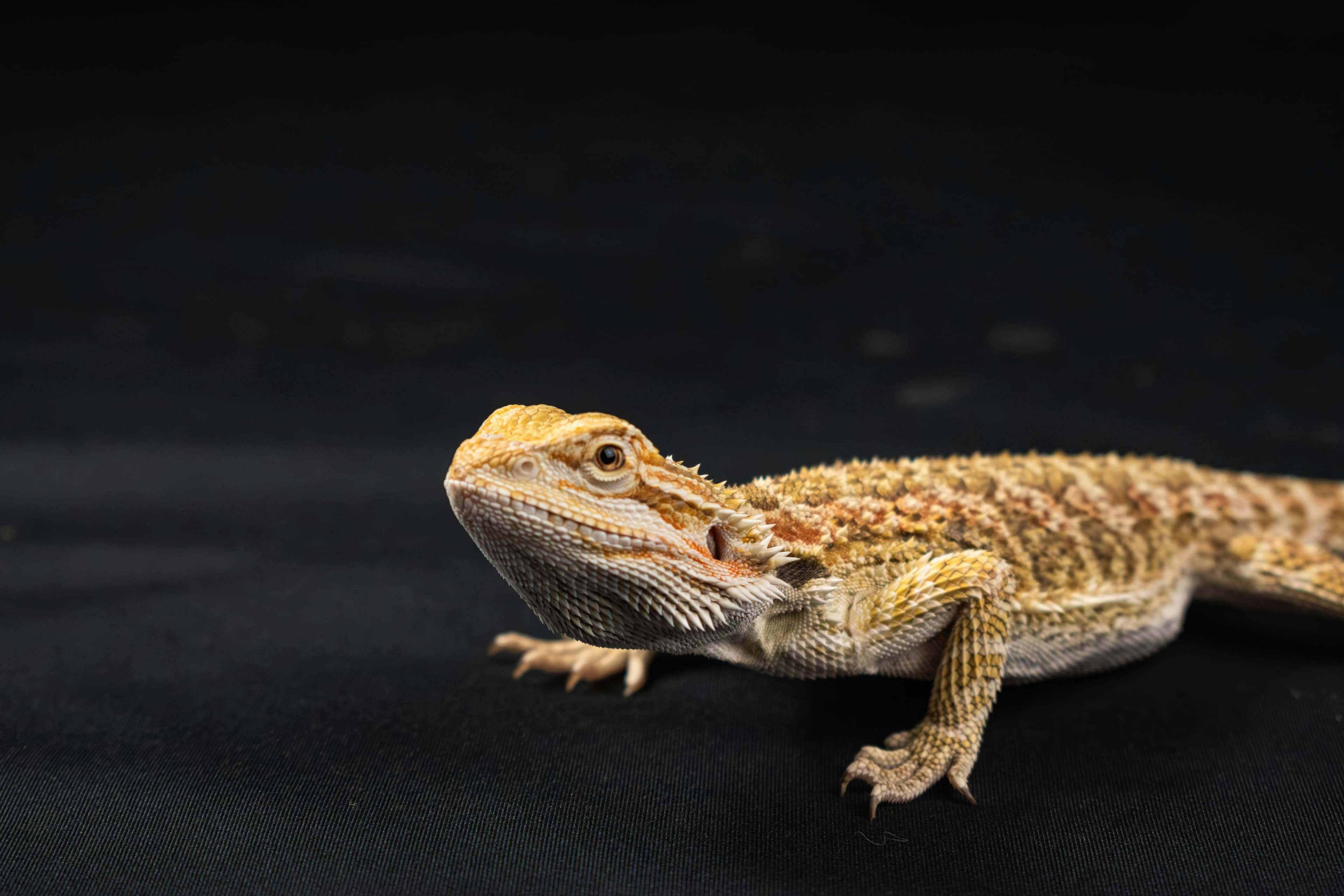
bearded dragon
Pogona vitticeps
a hardy, day-active australian lizard. straightforward diet, lighting setup is non-negotiable.
photo by pixabay on pexels
difficulty
beginner
adult size
45–60 cm nose-to-tail, 350–600 g
lifespan
10–15 years
origin
arid central australia
00 / overview
about
bearded dragons are diurnal omnivores from arid central australia. they thrive in a wide temperature gradient with a hot basking surface and proper t5 ho uvb. they handle well once habituated and tolerate routine human interaction better than most reptiles.
what makes them a reasonable first reptile: predictable diet, visible behaviour cues (head bobs, arm waves, beard colour), broad temperature tolerance. what trips first-time keepers: weak or expired uvb, insufficient temperature differential between basking and cool side, pet-store advice that's a decade out of date, and over-supplementing d3 when uvb is already doing the job.
read the husbandry block below. every line is load-bearing.
01 / setup
enclosure
- type
- pvc
- minimum dimensions
- 120 × 60 × 60 cm
- substrate
- bare tile, slate, washable lino, or paper towel. no loose calci-sand, no walnut shell.
120 × 60 × 60 cm (4 × 2 × 2 ft) is the absolute floor for a single adult. 150 × 60 × 60 cm (5 × 2 × 2 ft) or 180 × 60 × 60 cm (6 × 2 × 2 ft) is strongly preferred and now considered standard by most experienced keepers. pvc holds heat better than glass and lets the t5 ho mount internally. include a basking platform (flat slate, ledge, or stacked stone), a cool-side hide, and a shallow water dish.
02 / climate
temperature, humidity, uvb
temperature
cool side
24–27°c
warm side
30–35°c
basking
41°c
night drop to
21°c
humidity
30–40%
uvb
- bulb
- arcadia 12 % or 14 % t5 ho (or zoo med reptisun t5 ho 10.0), full length of tank. mount inside on mesh-free if possible; otherwise account for ~30 % uvi loss through screen.
- target uvi
- 5
- photoperiod
- 12 h / day
measure basking surface temp with an infrared point-and-shoot, not just an ambient probe. target 40–43 c on the basking surface for adults, 43–46 c for juveniles. uvi at basking height should sit 4.0–6.0 (ferguson zone 3–4) — verify with a solarmeter 6.5 if you can borrow one, otherwise follow the bulb manufacturer's distance chart. replace the t5 ho bulb every 12 months; output drops well before the visible light dies. drop temps fully at night, no heat source. no coloured night bulbs.
03 / nutrition
diet
feeders
- dubia roaches
- discoid roaches
- black soldier fly larvae (phoenix worms)
- crickets
- silkworms
- hornworms (treat, low calcium)
- collard greens
- mustard greens
- turnip greens
- dandelion greens
- endive
- escarole
- bell pepper
- butternut squash
- snap peas
feeding frequency
juveniles under 6 months: live feeders daily, greens offered daily. sub-adults 6–12 months: live feeders 5–6× per week. adults 12+ months: greens daily, live feeders 2–3× per week. adult ratio is roughly 80 % greens / 20 % protein by volume (the "flip" from juvenile ratios).
supplementation
- calcium (no d3)most feeder days, light dust
- calcium + d31× per week
- multivitamin (e.g. arcadia earthpro-a or repashy calcium plus lod)1× per week
tongs only for live feeders. feeders no wider than the space between the eyes. avoid iceberg lettuce, spinach (oxalates bind calcium), avocado (toxic), rhubarb, and citrus. mealworms and superworms are not a staple, too much chitin, low calcium-to-phosphorus. with proper t5 ho uvb, weekly d3 is enough; daily d3 risks hypervitaminosis and soft-tissue calcification. an all-in-one product (earthpro-a, repashy calcium plus) can replace the three-product schedule if used as directed.
04 / interaction
handling
frequency
daily 10–15 min sessions once acclimated. give a new dragon 1–2 weeks of minimal disturbance first.
no handling for 48 h after a meal, risk of regurgitation. scoop from under the belly, support all four limbs, never grab the tail. head bobs are normal communication, not aggression. an arm wave from a smaller dragon is a submissive gesture, leave it be.
05 / seasonal
brumation
not every captive dragon brumates, and most do not in their first 12 months. when it happens (typically late october through february), expect reduced appetite, more sleep, lower activity for several weeks. weigh weekly; a vet visit is warranted if weight drops more than 10 % or activity is paired with other illness signs. do not feed during a true brumation, the food will rot in the gut at low temps.
08 / red flags
common health issues
metabolic bone disease (mbd): insufficient uvb, expired bulb, or wrong calcium/d3 ratio. signs: rubbery jaw, twitching, soft limbs, reluctance to climb, kinked spine in juveniles. preventable with proper t5 ho uvb at the right distance and a sensible calcium schedule. requires an exotic vet, not a home fix.
impaction: feeders too large (rule of thumb: nothing wider than the space between the eyes) or loose substrate ingested at feeding time. signs: refusal to eat, no defecation for several days, bloated abdomen, dragging back legs. emergency.
respiratory infection: chronic low temps, high humidity, or both. signs: mucus around nose or mouth, open-mouth breathing at rest (not the same as thermoregulating with mouth agape on the basking spot), lethargy, clicking when breathing. vet visit, often antibiotics.
follicular stasis (egg-binding): females can develop infertile follicles whether or not a male is present, typically from ~18 months. signs: enlarged abdomen, restlessness, digging, refusing food, straining. unresolved cases require surgery. spaying is the long-term fix for repeat offenders.
atadenovirus: chronic immunosuppressive virus, common in pet-store and rescue stock. there is no cure. signs are non-specific (stunted growth, recurring infections, weight loss). buy from breeders who test, quarantine new animals at least 90 days.
black-beard stress: an hour or less is normal communication. all-day black beard signals something is wrong. wrong temps, wrong tank-mate, illness. investigate.
09 / sourcing
where to get one
prefer captive-bred (cb) from a reputable breeder over pet-store stock. ask for the hatch date, the parents' morph history, and a recent fecal screen for parasites. ask whether the line has been tested for atadenovirus (advancedt vet diagnostics), since the virus is endemic in pet-store stock and incurable.
avoid: wild-caught (illegal for pogona vitticeps in most jurisdictions anyway), animals housed on calci-sand at the store, animals with sunken eyes, retained shed on toes, or unhealed tail tips. expect to pay more for a verifiable bloodline. "free dragon" listings often come with respiratory infections, mbd, or atadenovirus that cost more to treat than buying a healthy animal outright.
06 / questions
common questions
07 / references
sources
- reptifiles — bearded dragon care guideaccessed 2026-05-11
- arcadia reptile — lighting guide (ferguson zones, uvi targets)accessed 2026-05-11
- beardie bungalow — care + diet referenceaccessed 2026-05-11
- lafeber vet — bearded dragon basic careaccessed 2026-05-11
- msd veterinary manual — agamid lizards (pogona spp.)accessed 2026-05-11
provenance
- written by
- caresheet.app editorial
- reviewed by
- caresheet.app editorial, reviewed against 2024 reptile-keeper consensus (reptifiles, arcadia reptile lighting guide 2024, beardie bungalow, lafeber vet, msd veterinary manual)
- reviewed
- may 2026
- last updated
- may 2026
your animal
start a caresheet for your bearded dragon.
species defaults pre-filled. edit what's yours. share when it matters.
11 / related species