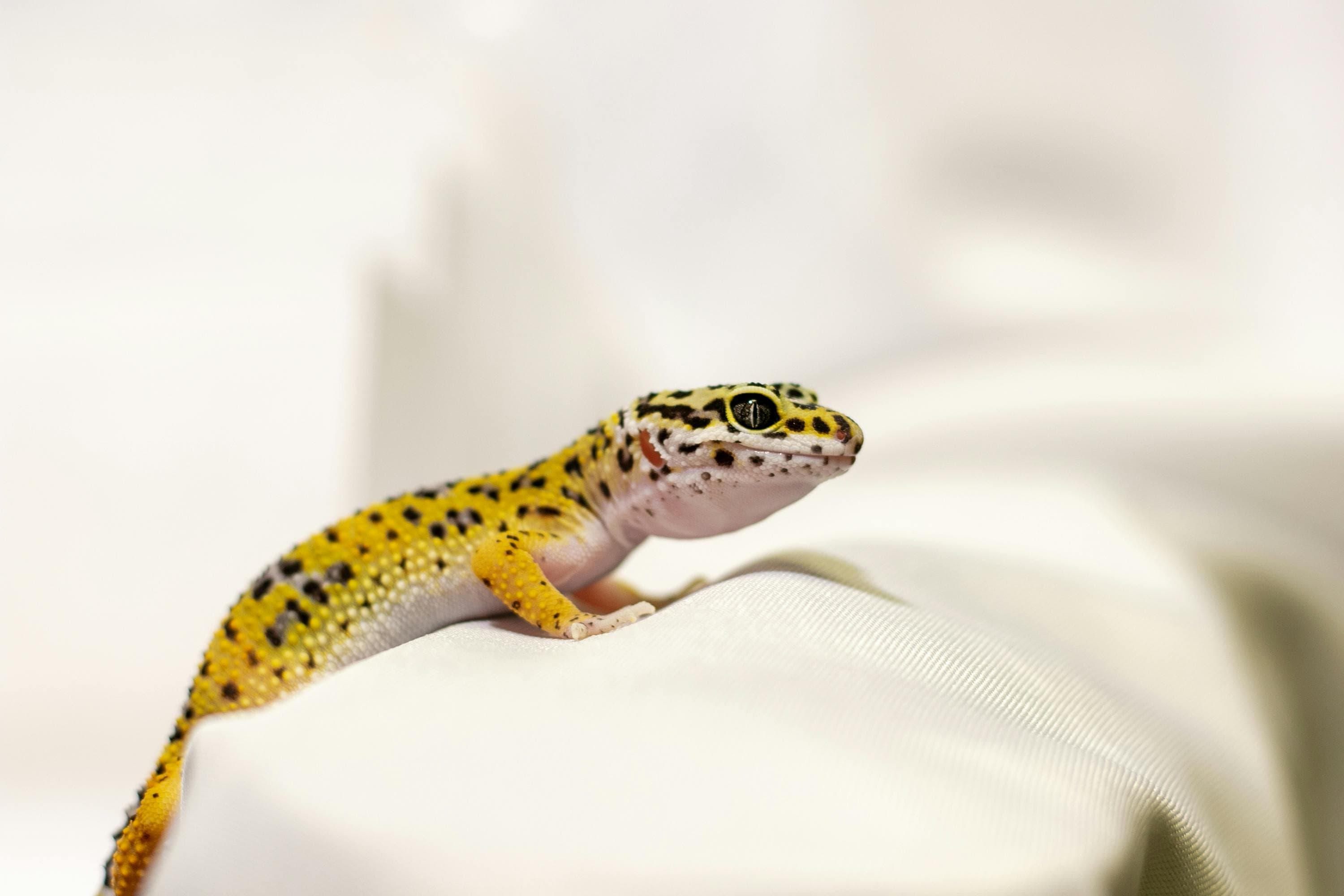
leopard gecko
Eublepharis macularius
a small, ground-dwelling crepuscular gecko. forgiving on temperature, strict on diet and substrate.
photo on pexels
difficulty
beginner
adult size
18–25 cm nose-to-tail, 50–90 g
lifespan
15–20 years (some 25+)
origin
arid rocky scrub of afghanistan, pakistan, and north-west india
00 / overview
about
leopard geckos are crepuscular ground-dwellers from arid rocky scrub. they are quiet, slow, and hand-tolerant once habituated, which is why they get marketed as a starter reptile. they live 15 to 20 years on a proper setup and a good chunk longer if you do everything right.
what makes them forgiving: room-temperature ambient is fine, no daily handling needed, no flying live prey. what trips first-time keepers: pet-store husbandry sheets that pre-date the 2018 uvb consensus, loose calci-sand substrate, and feeding mealworms as the entire diet (low calcium-to-phosphorus). a leopard gecko fed mealworms only and kept on calci-sand under a coil "uvb" bulb is the standard mbd presentation at exotic vets.
read the husbandry block below. every line is load-bearing.
01 / setup
enclosure
- type
- pvc
- minimum dimensions
- 90 × 45 × 30 cm
- substrate
- bare tile, slate, washable lino, or paper towel for juveniles. bioactive (organic topsoil + play sand + leaf litter) acceptable for adults on a proven setup. no loose calci-sand, no walnut shell, no crushed walnut.
90 × 45 × 30 cm (3 × 1.5 × 1 ft) is the absolute floor for a single adult. 120 × 45 × 45 cm (4 × 1.5 × 1.5 ft) is now considered standard by experienced keepers. they are terrestrial, so length matters more than height. three hides required: a warm hide on the basking side, a cool hide on the cool side, and a humid hide (damp sphagnum moss) somewhere in the middle. shallow water dish, not deep enough to drown a tail-dropping animal.
02 / climate
temperature, humidity, uvb
temperature
cool side
22–24°c
warm side
28–31°c
basking
35°c
night drop to
20°c
humidity
30–40%
uvb
- bulb
- arcadia shadedweller pro t5 7 % or zoo med reptisun t5 ho 5.0, 50–60 % length of tank
- target uvi
- 1
- photoperiod
- 12 h / day
measure basking surface temp with an infrared point-and-shoot, target 32–35 c on the warm-hide surface. uvi at basking height should sit 0.5 to 1.0 (ferguson zone 1, shade dweller). they are crepuscular, not diurnal, so do not push uvi above 1.0. replace the t5 ho bulb every 12 months. night drop to room temperature is fine, no heat at night unless the room falls below 18 c.
03 / nutrition
diet
feeders
- dubia roaches
- discoid roaches
- crickets
- black soldier fly larvae (phoenix worms)
- silkworms
- hornworms (treat, low calcium)
- mealworms (rotation, not staple)
- waxworms (treat only, high fat)
feeding frequency
hatchlings under 4 months: live feeders daily, 4–6 appropriately-sized feeders per session. juveniles 4–12 months: daily or every other day. adults 12+ months: every 2 to 3 days, until the tail just fills out (a flat or pencil-thin tail is underweight; a fat round tail is good fuel storage).
supplementation
- calcium (no d3)most feeder days, light dust
- calcium + d31× per week
- multivitamin (e.g. arcadia earthpro-a or repashy calcium plus lod)1× per week
tongs only for live feeders. feeders no wider than the space between the eyes. gut-load all feeders 24 hours before offering (carrot, squash, leafy greens, commercial gut load). leave a small dish of plain calcium powder in the enclosure, leopard geckos self-regulate intake. with proper low-output uvb, weekly d3 is enough; daily d3 risks hypervitaminosis. mealworms and superworms are not a staple, too much chitin and inverted ca:p ratio.
04 / interaction
handling
frequency
short 5–10 min sessions, 2–3× per week once habituated. give a new gecko 1–2 weeks of minimal disturbance first.
no handling for 48 h after a meal, risk of regurgitation. scoop from under the belly, support all four limbs, never grab the tail. a stressed gecko may detach its tail (autotomy), which regrows as a smaller "carrot" shape but is a real injury. signs to back off: squeaking, hiding, tail-waving, tail-rattling, retreating to a hide.
08 / red flags
common health issues
metabolic bone disease (mbd): from inadequate uvb plus skipped calcium supplementation. signs: kinked spine, twitching, soft jaw, reluctance to climb the cool hide, swollen limbs in juveniles. requires an exotic vet. preventable with low-output t5 uvb and a sensible calcium schedule.
cryptosporidiosis (crypto): caused by cryptosporidium varanii, common in pet-store stock. no cure. signs: chronic weight loss despite normal appetite, watery stool, "stick-tail" appearance, regurgitation. requires species-specific pcr test from an exotic vet. infected animals must be kept isolated for life. quarantine any new gecko 90 days minimum.
impaction: ingested loose substrate (calci-sand is the worst offender) or feeders too large for the gecko''s gape. signs: refusal to eat, no defecation for several days, bloated abdomen, dragging back legs. emergency. rule of thumb: feeders no wider than the space between the eyes.
dystocia (egg-binding): females can develop infertile follicles whether or not a male is present, typically from 12 months. signs: enlarged abdomen, restlessness, digging without laying, refusing food. unresolved cases require a vet. always provide a damp lay box for sexually mature females.
retained shed: low humidity or no humid hide. signs: white or grey patches on toes, eyelids, or tail tip. retained shed on toes constricts blood flow and leads to lost digits. fix: provide a humid hide with damp sphagnum moss at all times, never peel shed off manually, soak in shallow lukewarm water if needed.
tail loss (autotomy): a defensive drop, regrowth is normal but the regenerated tail is a smaller "carrot" shape. drop usually happens from being grabbed by the tail or from severe stress. avoid both. a recently dropped tail is an open wound, keep the gecko on paper towel until it scabs over.
09 / sourcing
where to get one
prefer captive-bred (cb) from a reputable breeder over pet-store or wholesale stock. pet-store leopard geckos are commonly carrying cryptosporidium varanii (the species-specific cryptosporidiosis), which is incurable and almost always fatal. ask the breeder whether their colony has been tested for crypto and quarantine any new animal for 90 days regardless.
ask for: hatch date, parents'' morph history, recent fecal screen, and weight curve. avoid: animals with stick-tail (visibly thin tails, sign of advanced illness or crypto), sunken eyes, retained shed on toes (can lead to lost digits), or any history of regurgitation. expect to pay 40–120 usd for a normal-morph cb juvenile, more for designer morphs. "free leopard gecko" rehoming listings often come with crypto.
06 / questions
common questions
07 / references
sources
- reptifiles — leopard gecko care guideaccessed 2026-05-11
- lafeber vet — leopard gecko basic careaccessed 2026-05-11
- arcadia reptile — lighting guide (ferguson zones, shade dweller uvi targets)accessed 2026-05-11
- msd veterinary manual — gekkonid lizardsaccessed 2026-05-11
- reptiles magazine — leopard gecko caresheetaccessed 2026-05-11
provenance
- written by
- caresheet.app editorial
- reviewed by
- caresheet.app editorial, reviewed against 2024 reptile-keeper consensus (reptifiles, lafeber vet, arcadia reptile lighting guide, msd veterinary manual, reptiles magazine)
- reviewed
- may 2026
- last updated
- may 2026
your animal
start a caresheet for your leopard gecko.
species defaults pre-filled. edit what's yours. share when it matters.
11 / related species